
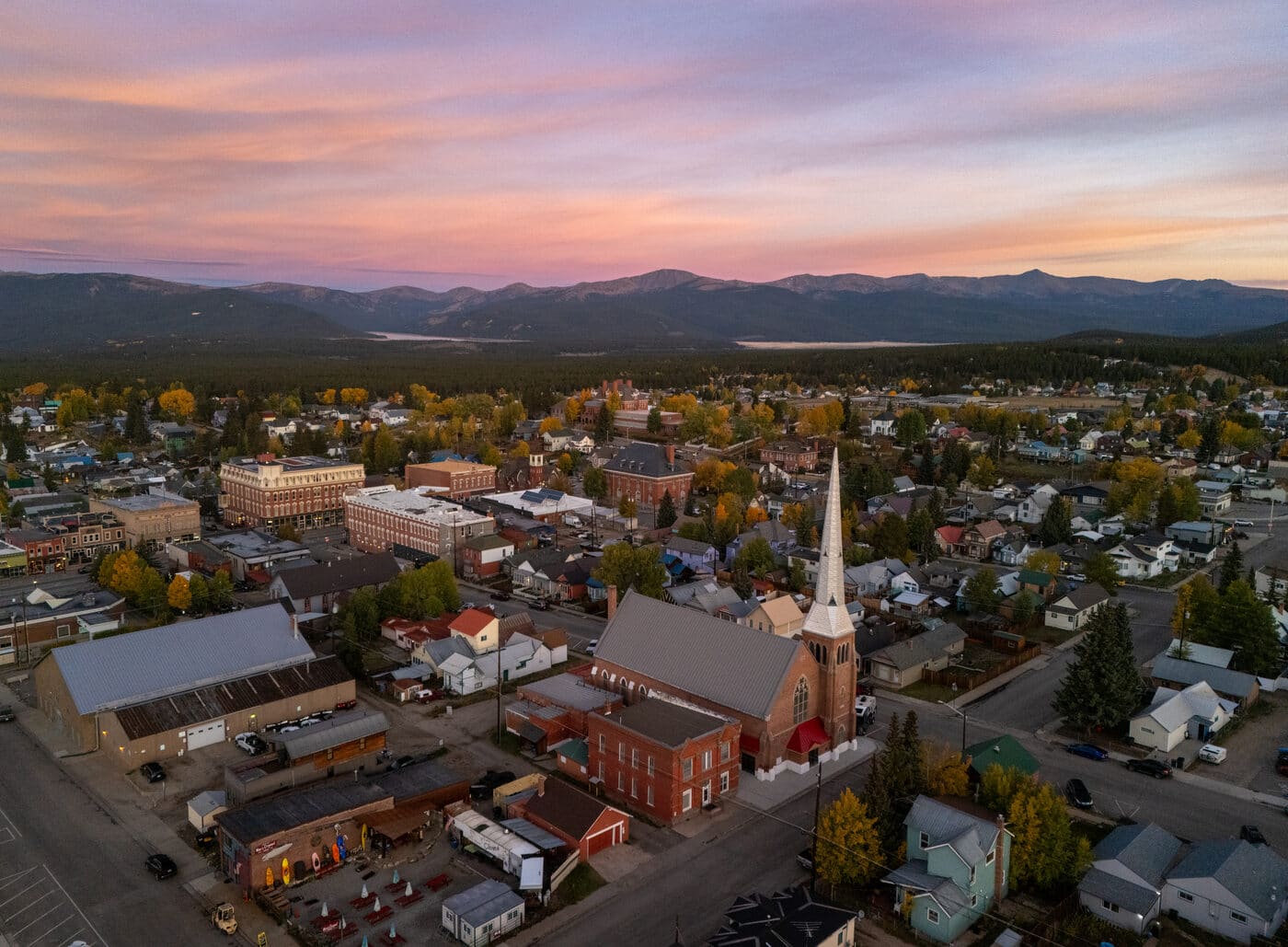
A useful shoulder-season campaign starts with one trip that can honestly be taken now. Define the visitor and the need period, confirm that the experience works, gather practical proof from local partners, build one strong planning page, and create a small set of stories that lead people there. Promotion comes after the trip holds together.
Shoulder-season marketing often begins with a calendar problem: lodging softens after summer, a board wants more midweek business, or downtown merchants need traffic between major events. The quick response is a fall film, a winter landing page, or a paid campaign. But if the destination has not assembled a trip that works in that season, the content can only decorate the gap.
The first job is to prove the visit. Can a specific traveler arrive, stay, eat, move around, and fill two worthwhile days when weather changes and hours shorten? Which experiences are dependable? What requires a reservation? What closes on Tuesday? What remains good in rain, smoke, snow, or early darkness? These are content questions because they are traveler questions.
Start with the need period, not the season name
"Fall" is too broad to guide a small team. A need period is more precise: Sunday through Thursday in October, the three weeks after the holiday market, or snow-free weekends before summer trail services begin. It names the dates when capacity exists and the local economy can actually benefit.
Official destination plans show why this specificity matters. Livingston's FY2026 DMO plan pairs cool-season demand with a defined audience and a mix of arts, culture, events, history, food, and recreation, then assigns roles to paid, owned, and earned media. Humboldt County's 2026 countywide strategy identifies spring and fall as emphasis periods inside a broader budget and market plan. Sunshine Coast Tourism describes shoulder-season growth as part of its year-round mandate. The common thread is not autumn color. It is an operating choice about when, where, and from whom demand would be useful.
Write the assignment in one sentence: "Increase two-night, Sunday-through-Thursday stays from couples within a three-hour drive during the first three weeks of November." If the organization cannot name the useful change that clearly, it is not ready to choose a story or media channel.
Build a proof stack for the trip
A shoulder-season promise needs four layers of proof. Each one answers a different hesitation. Missing any layer leaves the traveler to finish the planning work alone.
| Layer | Question it answers | Evidence to gather |
|---|---|---|
| Reason | Why come during this period? | A seasonal experience, mood, event, condition, or value that is genuinely better now |
| Depth | Is there enough for a stay? | A two-day sequence with food, culture, outdoors, rest, and realistic travel time |
| Reliability | Will it be open and workable? | Current hours, booking rules, weather alternatives, accessibility, closures, and contact details |
| Path | How do I act on this? | One planning page with lodging, map, reservations, dates, partner links, and a clear next step |
The reason does not have to be spectacular. It can be a quieter downtown after the day-trip rush, a cold-weather arts calendar, bird migration, harvest menus, better stargazing hours, or uncrowded access to a landscape that remains safely open. The test is whether the destination can document it without exaggeration and whether local businesses can deliver it consistently.
Depth is where many campaigns fail. Three unrelated attractions do not automatically make a weekend. Arrange the visit in time. Show what happens after 5 p.m., what replaces an outdoor plan when conditions turn, and why staying the second night makes the trip easier or richer. A traveler should be able to picture the pace, not merely admire the ingredients.
Audit partner readiness before the camera arrives
Call the businesses and organizations that make the trip possible. Do not treat an old listing as confirmation. Ask each partner about seasonal hours, staffing, reservation capacity, planned closures, age or mobility limits, weather policies, image permissions, and the page where a visitor should take action. Record the date of confirmation and the person responsible for updates.
- At least two lodging choices can accept the intended visitor during the need period.
- Food is available at the times shown in the itinerary, including the quietest day promoted.
- The anchor experience has confirmed dates, access, capacity, and a booking path.
- There is a credible indoor or lower-risk alternative when weather changes.
- Partner pages are current, mobile-friendly, and linked to the destination's main planning page.
- Residents and front-line staff understand the campaign promise and can give a consistent answer.
- Someone owns weekly accuracy checks through the end of the campaign.
If several boxes remain unchecked, content production should pause. The useful work at that point is coordination: simplify the promise, narrow the dates, recruit a missing partner, or build a smaller trip that can be delivered. Honest limits make stronger stories than a campaign that sends visitors toward locked doors.
Make the planning page the center of the campaign
The main page should answer the trip in plain language near the top: who it suits, when to come, how long to stay, what is reliably open, and what to book first. Follow with the two-day plan, a compact map, current partner links, weather and access notes, and the date the information was checked. Keep event dates and business hours in fields that can be updated without rebuilding the story.
This is also sound search practice. Google's guidance asks publishers to create people-first material that leaves a reader feeling they learned enough to achieve their goal. For a destination page, the goal is not learning that a town is charming. It is deciding that this particular trip is worth taking and understanding how to take it.
Build every asset around that page. A character-led film can establish the seasonal reason. Short vertical cuts can answer one hesitation at a time. Still photographs can show the actual range of the trip. Email can reach past visitors who already understand the drive. Partners can share the piece that best matches their guests. Paid media can amplify the clearest proof once the organic path is working. For a broader look at that system, see our ongoing destination content programs.
A six-week map for a small tourism team
| Week | Decision | Working output |
|---|---|---|
| 1 | Define the need period and visitor | One-sentence objective, capacity baseline, source market, and campaign owner |
| 2 | Prove the trip with partners | Confirmed hours, booking paths, alternatives, access notes, and update owners |
| 3 | Choose the story and distribution jobs | Creative brief, channel roles, shot priorities, releases, and production schedule |
| 4 | Produce the proof | Core story, practical clips, stills, interviews, captions, and clean partner assets |
| 5 | Publish and test the path | Planning page, tracked links, partner toolkit, email, and mobile quality check |
| 6 | Release in sequence | Owned launch, partner distribution, earned outreach, then selective paid support |
The schedule is intentionally front-loaded with decisions. A clear production brief protects both the story and the budget; our tourism video RFP guide covers scope, access, rights, deliverables, and proposal review in more detail. The same discipline applies even when the work is commissioned without a formal RFP.
Measure qualified demand, not seasonal attention
Set the baseline before launch. Depending on the objective, useful signals may include planning-page visits from the target drive market, clicks to participating lodging and reservation pages, email sign-ups tied to the seasonal offer, partner referral traffic, midweek occupancy, or booking inquiries during the named dates. Separate campaign activity from visitor action and from destination outcomes. A completed video is activity. A lodging click is traveler action. A stronger need-period stay is an outcome.
Expedia Group's 2025 Traveler Value Index drew on 11,000 respondents across 11 markets, useful evidence that travel decisions are shaped by more than inspiration alone. But a global study cannot choose a small town's need period or prove its partner capacity. Use broad research to sharpen questions, then let local occupancy, search, booking, resident, and partner evidence determine the campaign.
After the season, hold a short partner review. Which promise drew qualified interest? Where did visitors hesitate? Which hours or access details changed? Which assets kept working after launch week? Carry those answers into the next production cycle. Shoulder-season marketing gets more credible when it becomes a maintained body of local knowledge, not a new theme pasted onto the calendar each year.
Sources and further reading
- County-Wide Travel and Tourism Marketing Strategy, County of Humboldt
- Livingston FY2026 DMO Plan, Montana Department of Commerce
- Marketing, Sunshine Coast Tourism
- 2025 Traveler Value Index, Expedia Group
- Creating Helpful, Reliable, People-First Content, Google Search Central