
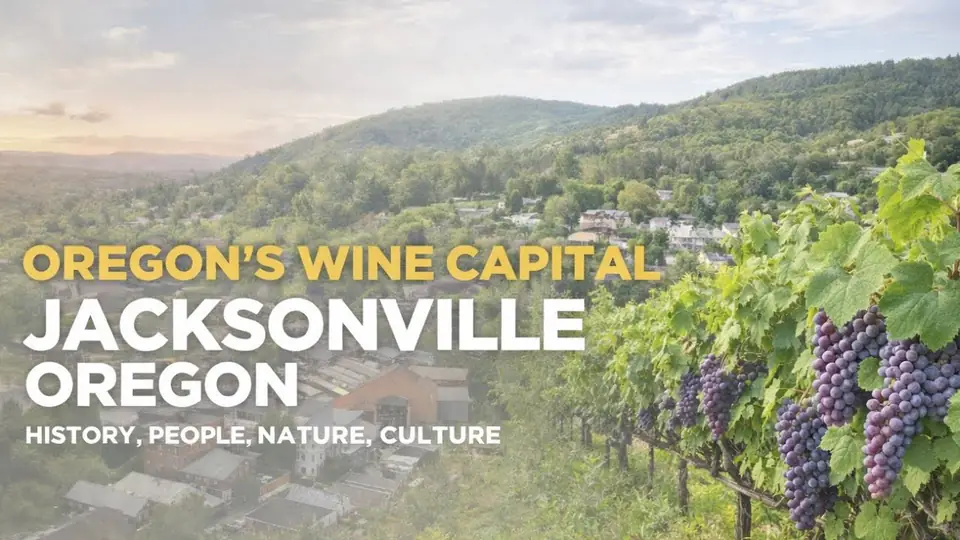
Jacksonville works best as a two-night stay built around its compact historic center. Walk the town before driving anywhere, give one afternoon to the surrounding wine country, choose a concert or a woodland trail, and leave enough space for the place to surprise you.
Jacksonville is easy to underestimate on a map. The historic center is compact, Medford sits only a short drive away, and many travelers first meet the town as a stop on a larger Southern Oregon trip. That makes it tempting to schedule lunch, walk one block, and keep moving.
Stay overnight instead. Jacksonville makes more sense when the day-trippers leave, when an evening concert is ahead of you, or when a morning walk can begin without another destination waiting in the car. The appeal is not one blockbuster attraction. It is the unusual amount of history, culture, food, wine, and open land gathered around a town small enough to cross on foot.
Why Jacksonville feels different
Gold was discovered near Rich Gulch in 1851, and the settlement that followed became an important commercial center in the Oregon Territory. The railroad bypassed Jacksonville in 1884. Growth shifted elsewhere, but many of the nineteenth-century buildings remained. In 1966, the Jacksonville Historic District received National Historic Landmark designation.
That history is not confined to a museum. It sets the scale of the streets and storefronts. Brick commercial buildings sit close to the sidewalk. Houses, churches, and civic buildings remain part of the walk between breakfast and dinner. The town's visitor information describes more than 100 structures within its historic district, but the useful number for a traveler is simpler: there is enough here to reward attention without requiring a windshield.
Friday evening: park the car and learn the street
Begin on California Street, then let the side streets pull you away from it. Look at the upper floors, old masonry, narrow lots, and transitions between commercial blocks and residential neighborhoods. Jacksonville is walkable enough that the first evening does not need an itinerary. It needs daylight and curiosity.
Choose dinner in town and take a second walk afterward. If you are visiting during the outdoor concert season, the route uphill toward the Britt Pavilion becomes part of the evening. Britt advises that the walk from downtown takes roughly 10 to 15 minutes and is mostly uphill. On performance days, a trolley also serves the venue. Check Britt directly for the current schedule, ticketing, accessibility information, and transportation details.
Saturday morning: follow the history beyond the plaques
A guided walk or trolley tour is the quickest way to understand why the town looks the way it does. Jacksonville's visitor organization lists walking tours, history trolley trips, and seasonal access to places such as the Beekman House and Beekman Bank. Offerings change, so confirm dates rather than building a trip around an old calendar listing.
The important story is bigger than preserved architecture. The gold rush brought rapid settlement into the homeland of the Upland Takelma people, followed by conflict and forced removal. A useful visit should hold both realities: the ingenuity and survival visible in the historic town, and the human cost beneath the familiar frontier story. Look for interpretation that names who was here before the gold camps and how the region changed.
Peter Britt is one recurring thread. The Swiss immigrant became a photographer who documented decades of Rogue Valley life. His former estate is now home to the Britt Music & Arts Festival, linking the town's visual record, landscape, and present-day cultural life in one hillside place.
Saturday afternoon: choose a piece of wine country
Jacksonville sits within reach of several Southern Oregon wine routes, including the Applegate Valley. The local visitor bureau lists tasting rooms in town and wineries spread through the surrounding valley. That range is an advantage only if you resist trying to collect all of it.
Choose one geographic cluster or reserve a guided option. Two thoughtful stops leave room for the drive, the people pouring, and the differences between sites. A long checklist of tasting rooms turns a landscape into errands. If everyone in your group wants to taste, arrange transportation before the first reservation. Jacksonville's Wine Trolley operates on published schedules, but availability is seasonal and should be confirmed directly.
Travel Oregon describes Jacksonville as a gateway to the Applegate Valley Wine Trail. The word gateway is right. The town gives you a walkable base, while the valley provides the wider agricultural setting that explains why wine belongs here. Return downtown for the evening rather than trying to push onward to another region.
Saturday night: let one event anchor the trip
Britt began presenting concerts in 1963 and remains the town's defining seasonal gathering place. The outdoor pavilion sits among the hills above downtown, with music, gardens, and trails sharing the former Britt estate. Its main outdoor season generally runs from June into September, while education and community programs extend beyond the mainstage calendar.
If a performance lines up with your visit, build the day around it rather than squeezing it between winery stops. Leave time to walk or ride uphill, settle in, and see the light change over the Rogue Valley. If there is no concert, that is not a failed weekend. A small town should not need a major event to justify the night.
Sunday morning: walk from gold history into the woods
The Jacksonville Woodlands begin close to town and connect natural areas with remnants of the region's mining history. The Jacksonville Woodlands Association maintains maps for a network of more than 16 miles of trails, with routes ranging from short interpretive walks to longer loops. The City of Jacksonville also provides a mobile trail map.
Pick a route that fits the weather and your actual morning. The Sarah Zigler Trail near Britt Gardens is a shorter option. Longer routes climb toward viewpoints and historic mining areas. Carry water, stay on marked trails, and check current restrictions or hazards, especially during hot, smoky, wet, or fire-prone periods.
The trails complete the Jacksonville story. Preservation here is not only about keeping old storefronts upright. Local volunteers also protected the wooded backdrop and public paths that make the historic district feel held by the landscape rather than separated from it.
What to plan and what to leave open
| Plan ahead | Leave room for |
|---|---|
| Lodging for two nights | An evening walk after the day visitors leave |
| Britt tickets and venue details | A quiet night when no major event is scheduled |
| One wine-country route and transportation | A longer conversation at fewer stops |
| Tour and museum schedules | Side streets and buildings that catch your attention |
| Trail map, weather, and current conditions | Choosing a shorter walk when the day calls for it |
Jacksonville does not need to be treated as a secret, and it does not need the usual promise that you will find it before everyone else does. Its value is more durable than novelty. The town offers a coherent weekend at human scale, where the history is visible, the hills are close, and the best parts do not require racing between pins on a map.
Sources and further reading
- Jacksonville, Travel Oregon
- Historic Jacksonville Oregon, Jacksonville Oregon Chamber of Commerce
- Jacksonville Historic District, National Park Service
- About Britt, Britt Music & Arts Festival
- Getting Here: Britt Pavilion, Britt Music & Arts Festival
- Jacksonville Woodlands, City of Jacksonville, Oregon
- Jacksonville Woodlands Association, Jacksonville Woodlands Association